Half of All Data Centers Planned for 2026 Have Been Cancelled or Delayed — The AI Boom's Infrastructure Crisis Is Here
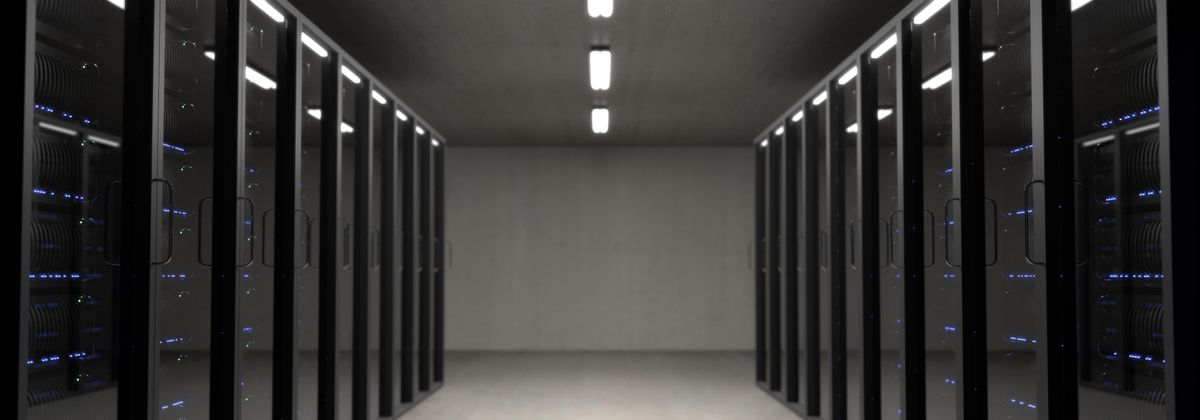
The AI gold rush promised an explosion of data centers across the globe. Every major tech company — from Microsoft to Meta to Amazon — announced massive construction plans in 2024 and 2025, committing hundreds of billions of dollars to building the computational infrastructure needed to power the AI revolution. The message was clear: the future runs on data centers, and we need more of them. Fast.
Now, in April 2026, reality has arrived like a cold shower. According to multiple industry reports and leaked internal memos, approximately half of all data center projects planned for this year have been either cancelled outright or pushed back indefinitely. The AI infrastructure boom isn't just cooling off — it's hitting a wall made of physics, politics, and economics.
The Numbers Are Staggering
Let's put this in perspective. In 2024, the global data center construction pipeline hit an all-time high of roughly 35 gigawatts of planned capacity. That's enough electricity to power a country the size of the Netherlands. Tech companies were racing to secure land, permits, and power contracts across North America, Europe, and Asia.
Fast forward to today, and industry tracker DC Byte estimates that projects representing approximately 17-18 gigawatts of that capacity are now on hold, delayed, or cancelled entirely. That's not a slight adjustment — it's a fundamental correction that's sending shockwaves through the tech industry, real estate markets, and energy sector simultaneously.
The biggest names in tech are all affected. Microsoft has reportedly paused or scaled back data center projects in at least six U.S. states. Meta has delayed its ambitious hyperscale campus in Louisiana. Amazon Web Services has pushed back timelines on multiple European facilities. Even Google, which has been more cautious in its expansion plans, has quietly shelved two major projects.
The Power Problem Nobody Solved
The single biggest reason for the cancellations is brutally simple: there isn't enough electricity. Modern AI data centers are power-hungry monsters. A single facility running thousands of NVIDIA H100 or B200 GPUs can consume as much electricity as a small city. When every major tech company simultaneously decided they needed dozens of these facilities, they ran headfirst into the reality that the electrical grid wasn't built for this.
In the United States, utility companies have been warning for over a year that they simply cannot deliver the power needed for the planned data center buildout. Virginia's Dominion Energy, which serves the world's largest concentration of data centers in Northern Virginia, has pushed back connection timelines to 2030 or later for new facilities. Similar bottlenecks exist in Texas, Georgia, and the Pacific Northwest.
Europe faces even steeper challenges. Ireland, which hosts data centers for virtually every major tech company, has effectively imposed a moratorium on new data center construction in the Dublin area due to grid capacity constraints. The Netherlands, Germany, and the Nordic countries are all grappling with similar limitations.
The RAM Crisis Compounds Everything
As if the power problem wasn't enough, 2026 has also brought an unprecedented memory shortage. The global supply of high-bandwidth memory (HBM) — the specialized RAM chips needed for AI processors — has been constrained since late 2025, with prices skyrocketing by 300-400% in some categories. Samsung, SK Hynix, and Micron are all running their fabrication plants at maximum capacity, but demand continues to outstrip supply.
This RAM crisis (which some in the industry have nicknamed "RAMageddon") means that even data centers that do get built face months-long delays waiting for the hardware to fill them. Several companies have reportedly completed construction on facilities that are sitting partially empty because the GPUs and memory modules needed to make them operational simply aren't available.
For tech enthusiasts wanting to understand the hardware side of this crisis, a good computer architecture reference book can help make sense of why these specific components are so critical.
The Financial Reckoning
Wall Street is starting to ask uncomfortable questions. Tech companies have collectively committed over $400 billion in data center capital expenditure over the past two years. When half those projects stall, the financial implications are enormous.
Construction firms that tooled up for the boom are now laying off workers. Real estate developers who purchased land for data center campuses are sitting on depreciating assets. Equipment manufacturers who ramped production are watching orders evaporate.
More importantly, investors are beginning to question whether the AI revenue projections that justified this spending will actually materialize. The logic was: build massive AI infrastructure → capture massive AI revenue. But if the infrastructure can't be built on time, or costs twice as much as projected, the math starts to break down.
Tech stocks have been volatile throughout Q1 2026, and the data center cancellations are adding fuel to the fire. Companies like Vertiv, Eaton, and Schneider Electric — which supply critical data center infrastructure — have seen their stock prices swing by 20-30% as the market tries to price in the new reality.
The Nuclear Option (Literally)
One of the most fascinating subplots in this story is the tech industry's sudden romance with nuclear energy. Microsoft signed a deal to restart Three Mile Island's nuclear reactor. Amazon purchased a data center campus adjacent to a nuclear plant in Pennsylvania. Google signed agreements with small modular reactor (SMR) companies.
The logic is sound — nuclear provides reliable, carbon-free baseload power that can run data centers 24/7. But nuclear projects take years or decades to come online, and the SMR technology that everyone is betting on hasn't been proven at commercial scale yet. It's a long-term solution to a right-now problem.
Meanwhile, some companies are exploring more creative solutions. Meta has reportedly been investigating floating data centers that could be powered by offshore wind. Microsoft is experimenting with underwater data centers cooled by the ocean. And several startups are pitching modular data centers that can be deployed in shipping containers and powered by on-site natural gas generators.
What This Means for AI Development
If you can't build the data centers, you can't train the models. It's that simple. The cancellation and delay of half the planned data center capacity means that the AI industry's growth trajectory is going to be constrained by physical infrastructure in a way that nobody fully anticipated.
This doesn't mean AI development stops — far from it. But it does mean that the companies with existing data center capacity have an enormous strategic advantage. It means that efficiency improvements in AI models (doing more with less compute) become far more valuable than brute-force scaling. And it means that the geographic distribution of AI power is going to be shaped by something as mundane as where the electrical grid has spare capacity.
For AI researchers and engineers, this is actually an exciting constraint. Some of the most important innovations in computing history have come from working within limitations rather than throwing unlimited resources at problems. The current infrastructure crunch could accelerate the development of more efficient AI architectures, better model compression techniques, and novel approaches to distributed computing.
The Bigger Picture
What we're witnessing is a classic boom-correction cycle, but on a scale the tech industry has never seen before. The AI hype of 2023-2025 created expectations that outran physical reality. Now, physics is reasserting itself.
This isn't the end of the AI data center buildout — it's a recalibration. The data centers will eventually get built, but on a longer timeline, at higher costs, and with more careful planning about power, cooling, and supply chains. The companies that navigate this transition successfully will be the ones that dominate the AI era. The ones that overcommitted to unrealistic timelines are going to feel real pain.
For everyday consumers and professionals, the practical impact is that the AI services and capabilities everyone has been promised may take longer to arrive at scale than the marketing suggested. The chatbots and image generators that work on your phone today will keep working. But the sci-fi-level AI applications that require massive computational infrastructure? Those just got pushed back.
The AI revolution is still happening. It's just going to be built one power plant, one supply chain, and one data center at a time — not all at once, as Silicon Valley would have preferred.
Affiliate Disclosure: Some links in this article are affiliate links. If you make a purchase through these links, we may earn a small commission at no extra cost to you. This helps support The Smart Pick and allows us to continue bringing you quality content.
Comments
Post a Comment