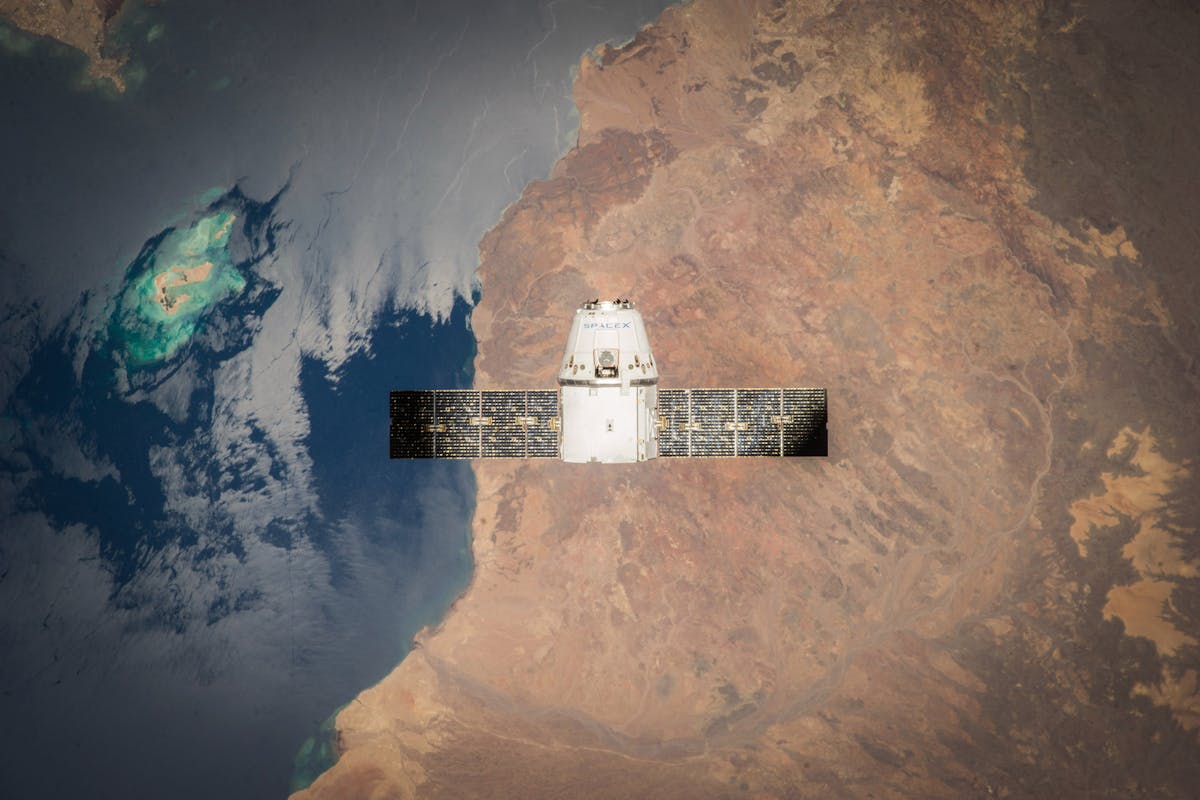
The space race isn't just about rockets anymore — it's about who controls the internet from orbit. Amazon just dropped a bombshell by acquiring Globalstar, and Elon Musk's SpaceX responded by launching 54 Starlink satellites in less than 24 hours. The billionaire battle for satellite internet supremacy is officially heating up, and it's going to change how the entire world connects.
Amazon's Globalstar Power Move
Amazon's purchase of Globalstar is a massive strategic play. Globalstar has been a satellite communications provider since the 1990s, and most people know it as the company powering Apple's Emergency SOS feature on iPhones and Apple Watches. That partnership alone made Globalstar a valuable asset — but Amazon sees something much bigger.
With this acquisition, Amazon's Project Kuiper — its constellation of low-earth orbit (LEO) internet satellites — gets an instant boost. Globalstar brings ground station infrastructure, spectrum licenses, and decades of satellite operations experience. It's the difference between building from scratch and buying a head start.
Jeff Bezos has been pouring billions into Project Kuiper, but progress has been frustratingly slow compared to SpaceX. As of this week, Amazon has launched just 241 LEO satellites in the last 12 months. For context, SpaceX has over 6,000 Starlink satellites in orbit and adds more almost every week.
SpaceX Fires Back — Literally
Elon Musk clearly got the message. Within hours of the Amazon-Globalstar news, SpaceX executed two separate Starlink launches, deploying 54 new satellites in under 24 hours. It was a flex — a reminder that while Amazon is buying its way into the game, SpaceX is already playing at a level nobody else can match.
SpaceX's advantage is vertical integration. They build the satellites. They build the rockets. They launch them on their own schedule, at a fraction of the cost competitors face. Amazon, meanwhile, has been relying on launches from ULA (United Launch Alliance), Arianespace, and Blue Origin — Jeff Bezos's own rocket company, which has had its share of delays.
The launch cadence tells the whole story. SpaceX can do multiple launches per week. Amazon's Project Kuiper has an FCC deadline to deploy half its planned 3,236 satellites by July 2026 — and they're nowhere close.
Why Satellite Internet Matters Now
You might be wondering: why should I care about satellites when I have perfectly good Wi-Fi? The answer is that roughly 3 billion people on Earth still don't have reliable internet access. Satellite internet is the only technology that can realistically close that gap.
But it's not just about rural villages. Satellite internet is becoming critical infrastructure for:
Airlines and cruise ships — Starlink already powers in-flight Wi-Fi for several airlines, and the quality is transforming the flying experience.
Military and government — Starlink's role in the Ukraine conflict proved that satellite internet is now a strategic military asset.
Disaster response — When hurricanes knock out cell towers, satellite internet keeps emergency services connected.
Remote work — As more people work from anywhere, satellite internet makes "anywhere" actually possible.
The total addressable market is estimated at $500 billion by 2030. That's why two of the richest men on Earth are spending their fortunes to dominate it.
The Numbers Don't Lie
Let's break down where things stand right now:
SpaceX Starlink: 6,000+ satellites in orbit. 4+ million subscribers in 100+ countries. Revenue estimated at $11.8 billion in 2025. Profitable and growing.
Amazon Project Kuiper: 241 satellites launched. Zero commercial subscribers. Over $10 billion invested. FCC deadline looming.
On paper, it looks like a blowout. But Amazon has something SpaceX doesn't: the world's largest cloud computing platform (AWS), the world's largest e-commerce platform, and a Prime membership base of 200+ million households. If Kuiper can piggyback on that ecosystem, the subscriber math could change fast.
What the Globalstar Deal Really Changes
The Globalstar acquisition gives Amazon three critical assets it was missing:
Spectrum licenses. Radio spectrum is the lifeblood of satellite communications, and it's incredibly scarce. Globalstar holds valuable L-band and S-band spectrum that Amazon can use for Kuiper services. Acquiring these licenses through a buyout is far faster than the years-long regulatory process of getting new ones.
Ground infrastructure. Globalstar operates ground stations around the world — the facilities that link satellites to terrestrial internet networks. Building these from scratch takes time and billions of dollars. Amazon just bought them.
Apple's relationship. Here's the wildcard. Globalstar's contract with Apple for Emergency SOS means Amazon now has a business relationship with its biggest competitor in consumer tech. How that plays out will be fascinating to watch. Will Apple renew? Build its own satellite capability? Partner with SpaceX instead?
What This Means for Consumers
Competition is almost always good for consumers, and satellite internet is no exception. Right now, Starlink charges $120/month for residential service in the US, with a $499 hardware kit. With Amazon entering the market, prices are almost certainly going to come down.
Amazon has a history of entering markets and aggressively undercutting on price — think Amazon Web Services, Kindle, Prime Video. If they bring that playbook to satellite internet, Starlink will have to respond. We could see residential satellite internet drop below $100/month within a year or two.
For people currently stuck with slow DSL or unreliable rural internet, this competition could be life-changing. If you're already thinking about making the switch to satellite internet, it might be worth getting your setup ready — whether that's a mounting kit, a mesh Wi-Fi system to extend coverage inside your home, or a UPS battery backup to keep your connection running during power outages.
The Wild Card: Everyone Else
It's not just Musk vs. Bezos. The satellite internet race has other serious players:
OneWeb (owned by Eutelsat) has 648 satellites and is targeting enterprise and government customers. Telesat Lightspeed is building a smaller but premium constellation. And China's Qianfan (SpaceSail) project is rapidly launching its own mega-constellation, with 660+ satellites already in orbit.
The race isn't just commercial — it's geopolitical. Whoever controls satellite internet infrastructure has enormous influence over global communications. That's why governments around the world are paying very close attention to this week's developments.
What to Watch Next
The next six months are going to be crucial. Amazon's FCC deadline is approaching. SpaceX is reportedly preparing to spin off Starlink as a separate public company. And the Globalstar integration will take time — regulatory approvals, technical integration, and workforce merging all take months.
One thing is certain: the internet is moving to space, and the battle to control it is only getting started. Whether you're team Musk, team Bezos, or just someone who wants faster internet in a rural area, this competition is going to benefit everyone.
Keep looking up. The future of your internet connection might be orbiting overhead right now.
Comments
Post a Comment