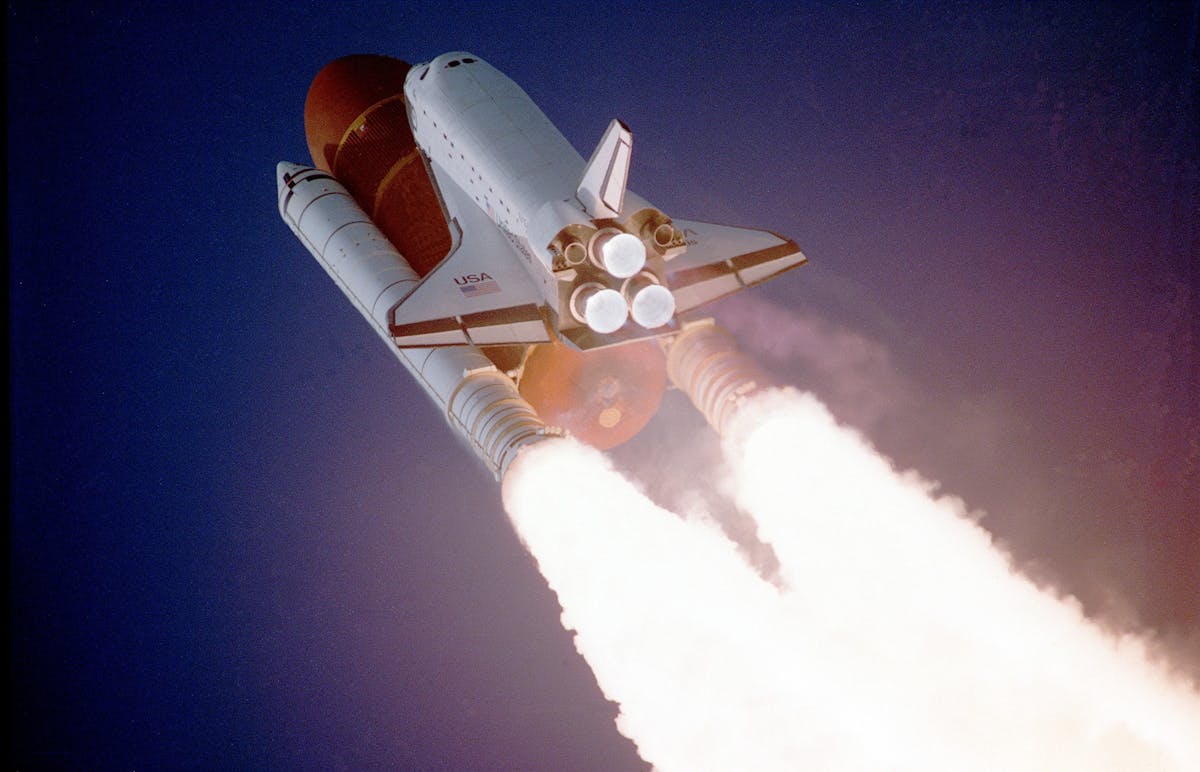
For the first time in over half a century, humans have left Earth's orbit — and the world is watching. NASA's Artemis II mission launched earlier this week, and as of today, April 3rd, 2026, the four-person crew aboard the Orion spacecraft is hurtling toward the Moon at breathtaking speed. Commander Reid Wiseman has already sent back stunning images of Earth, and the entire planet is captivated.
This isn't just a space mission. It's a defining moment for a generation that grew up hearing about Apollo but never witnessed anything like it firsthand. Let's break down everything happening with Artemis II, why it matters, and what comes next.
The Crew Making History
Artemis II carries four astronauts who are now officially the first humans to leave Earth orbit since Apollo 17 in December 1972. The crew includes:
Commander Reid Wiseman — a U.S. Navy test pilot and veteran astronaut who previously spent 165 days aboard the International Space Station. He's the one snapping those jaw-dropping photos of Earth from the Orion capsule's windows.
Pilot Victor Glover — another Navy aviator who made history as the first Black astronaut on a long-duration ISS mission. He's now making history again as part of the first crew to fly around the Moon in 54 years.
Mission Specialist Christina Koch — Koch holds the record for the longest single spaceflight by a woman (328 days on the ISS) and participated in the first all-female spacewalk. She brings unmatched experience in long-duration space operations.
Mission Specialist Jeremy Hansen — a Canadian Space Agency astronaut and former CF-18 fighter pilot. Hansen is the first Canadian to fly beyond low Earth orbit, and his inclusion highlights the international nature of the Artemis program.
What Is Artemis II Actually Doing?
Let's clear up a common misconception: Artemis II is not landing on the Moon. Instead, this is a lunar flyby mission — a critical test flight designed to verify that the Orion spacecraft and its life support systems can safely carry humans to the Moon and back.
The mission profile is a roughly 10-day journey. After launching from Kennedy Space Center in Florida, the crew spent time in Earth orbit conducting system checks. On April 3rd, they completed a critical maneuver called the trans-lunar injection (TLI) burn, which sent them out of Earth orbit and onto a trajectory toward the Moon.
The crew will travel approximately 252,799 miles (406,840 km) from Earth — exceeding the distance record set by Apollo 13 in 1970 (248,655 miles). They're expected to loop around the far side of the Moon on April 6th and splash down back on Earth around April 10th.
Those Stunning Photos From Space
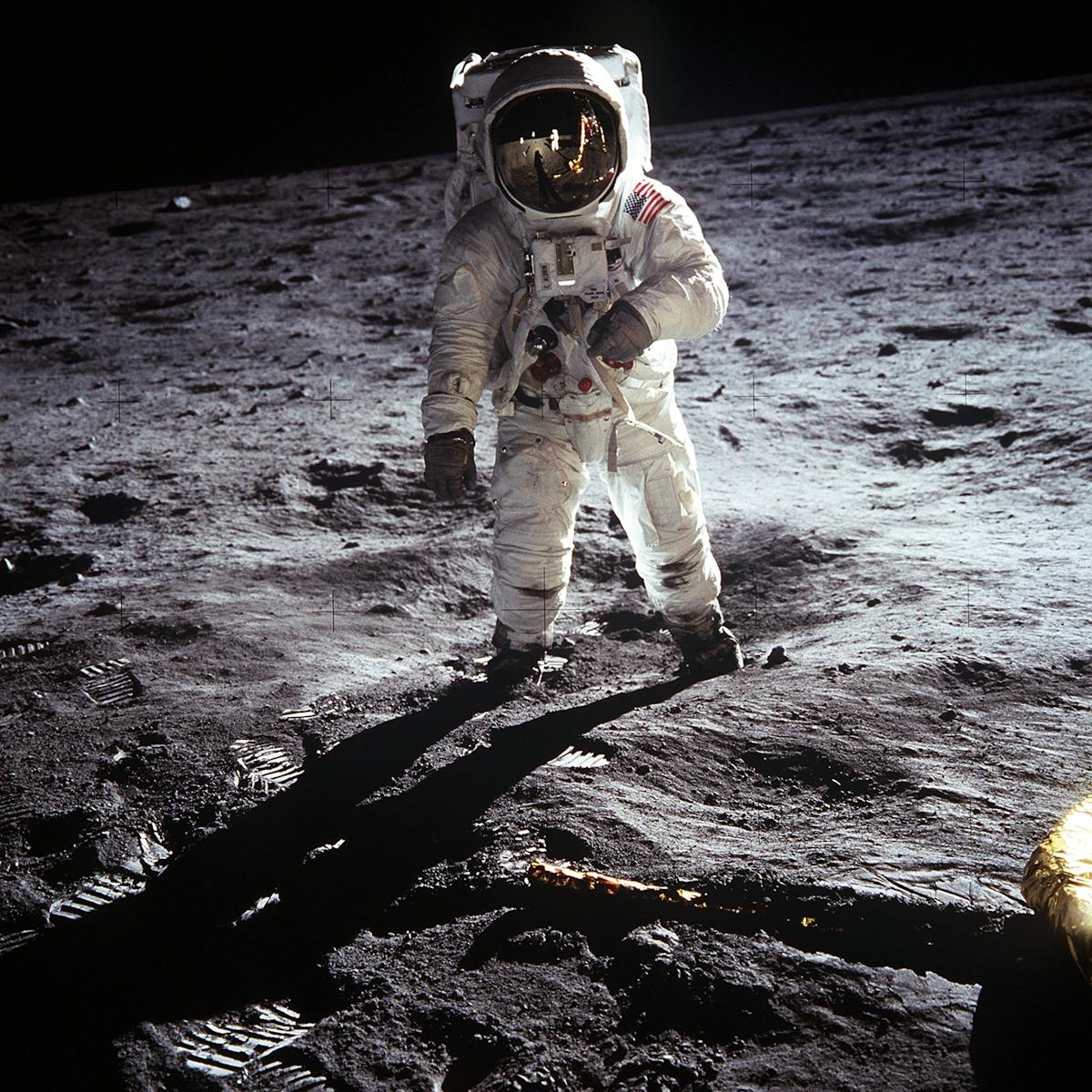
Commander Wiseman has been busy behind the camera. NASA shared the first high-resolution image from the mission, titled "Hello, World" — and it's absolutely breathtaking. The photo shows Earth as a luminous blue sphere, with the Atlantic Ocean dominating the view, the western Sahara and Iberian Peninsula visible on one side, and South America on the other. A thin atmospheric glow frames the planet, with green auroras visible at both poles. Venus appears as a bright dot in the background.
A second image, called "Artemis II Looking Back at Earth," was taken through one of Orion's four main windows. Mission Specialist Jeremy Hansen told mission control that the crew was "glued to the windows" after the TLI burn, soaking in views that only 24 humans before them have ever seen.
"It's like walking out back at your house, trying to take a picture of the moon. That's what it feels like right now." — Commander Reid Wiseman, on the challenge of photographing Earth from deep space
In a charmingly human moment, Wiseman radioed Houston to ask how to clean the spacecraft windows — the crew's enthusiasm had left fingerprints and smudges all over them.
Why Artemis II Matters Beyond the Mission
Artemis II is the second flight in NASA's Artemis program, which aims to return humans to the lunar surface and eventually establish a sustained presence there. The program is built around three pillars:
The Space Launch System (SLS) — the most powerful rocket ever built, capable of sending the Orion spacecraft and its crew beyond Earth orbit.
The Orion Spacecraft — designed for deep-space missions, Orion can support crew for up to 21 days in space and withstand the extreme heat of re-entry from lunar return velocities.
The Gateway — a planned small space station in lunar orbit that will serve as a staging point for missions to the Moon's surface and eventually deeper into the solar system.
If Artemis II succeeds — and so far everything is going extremely well — it paves the way for Artemis III, which aims to land astronauts on the lunar surface using SpaceX's Starship as a human landing system. That mission is currently targeting 2028.
The Space Economy Is Booming
Artemis isn't just about national pride or scientific discovery. It's fueling a massive commercial space economy. Companies like SpaceX, Blue Origin, and Lockheed Martin have billions in contracts tied to the Artemis program. The space industry is inspiring a new wave of interest in STEM education, engineering careers, and space-related products.
If you or someone you know is inspired by Artemis II, there's never been a better time to dive into space science. From beginner telescopes to NASA merchandise, the space exploration community is thriving.
What Happens Next?
Over the next few days, the world will be watching as the Artemis II crew approaches the Moon. Key milestones to look for:
April 4-5: The crew continues on their outbound trajectory, conducting experiments and system checks aboard Orion. Expect more incredible photos as they get further from Earth.
April 6: The crew flies around the far side of the Moon — the most dramatic and isolated moment of the mission. For approximately 30 minutes, they'll lose all communication with Earth as the Moon blocks radio signals.
April 10: Splashdown in the Pacific Ocean. Orion's heat shield will be tested at the extreme temperatures of lunar-return re-entry — around 5,000°F (2,760°C).
A New Chapter in Human Exploration
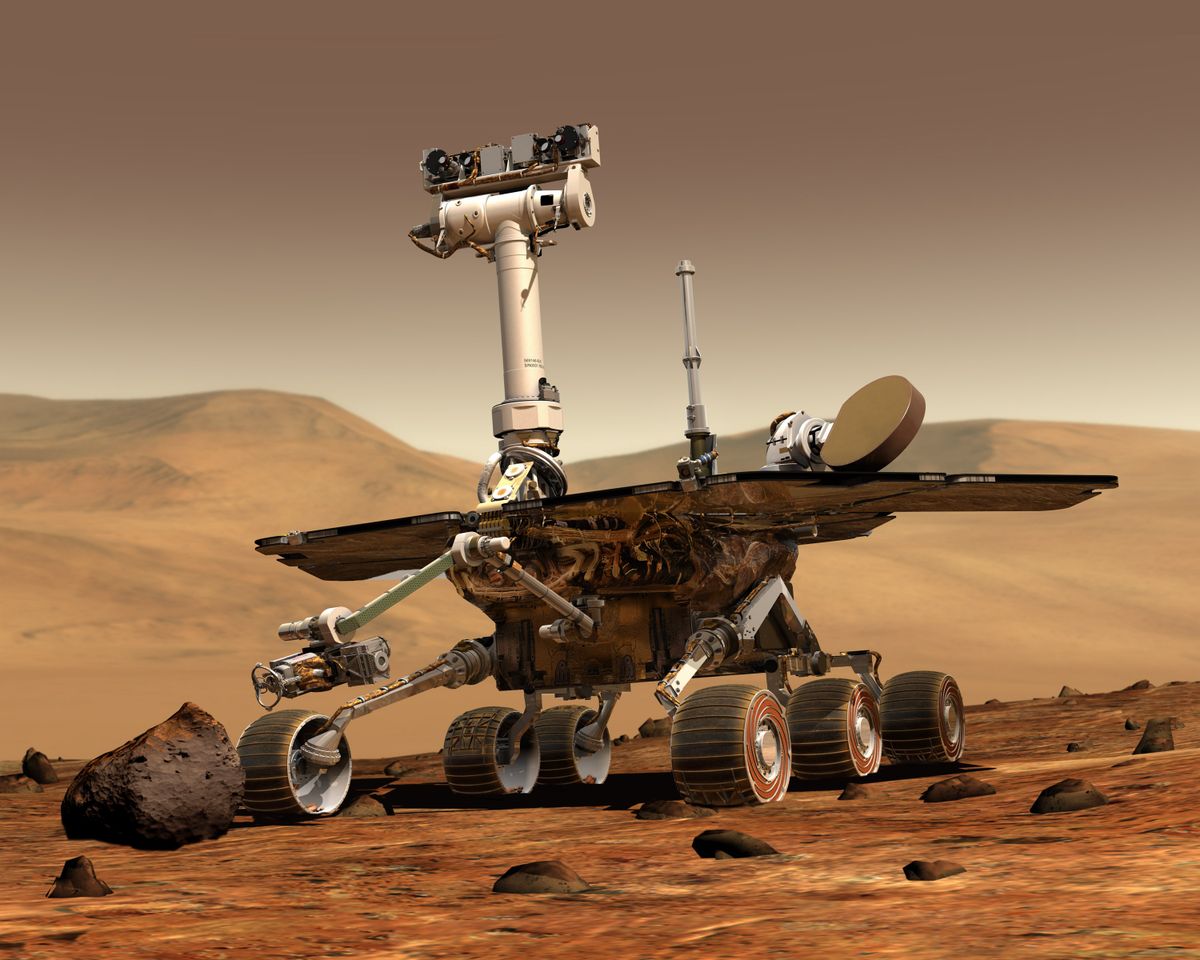
Artemis II represents something profound: the idea that humanity's greatest adventures aren't behind us. For decades, the Apollo missions existed only in history books and grainy footage. Now, a new generation is watching in real time as four astronauts push the boundaries of human exploration — with 4K cameras, social media updates, and global livestreams.
Whether you're a lifelong space nerd or just someone who looked up at the Moon tonight and felt something stir, this is a moment worth paying attention to. The journey back to the Moon — and eventually to Mars — has officially begun.
Stay tuned. The best is yet to come. 🚀
Disclosure: This article may contain affiliate links. If you make a purchase through these links, we may earn a small commission at no extra cost to you. We only recommend products we genuinely believe in.
Comments
Post a Comment