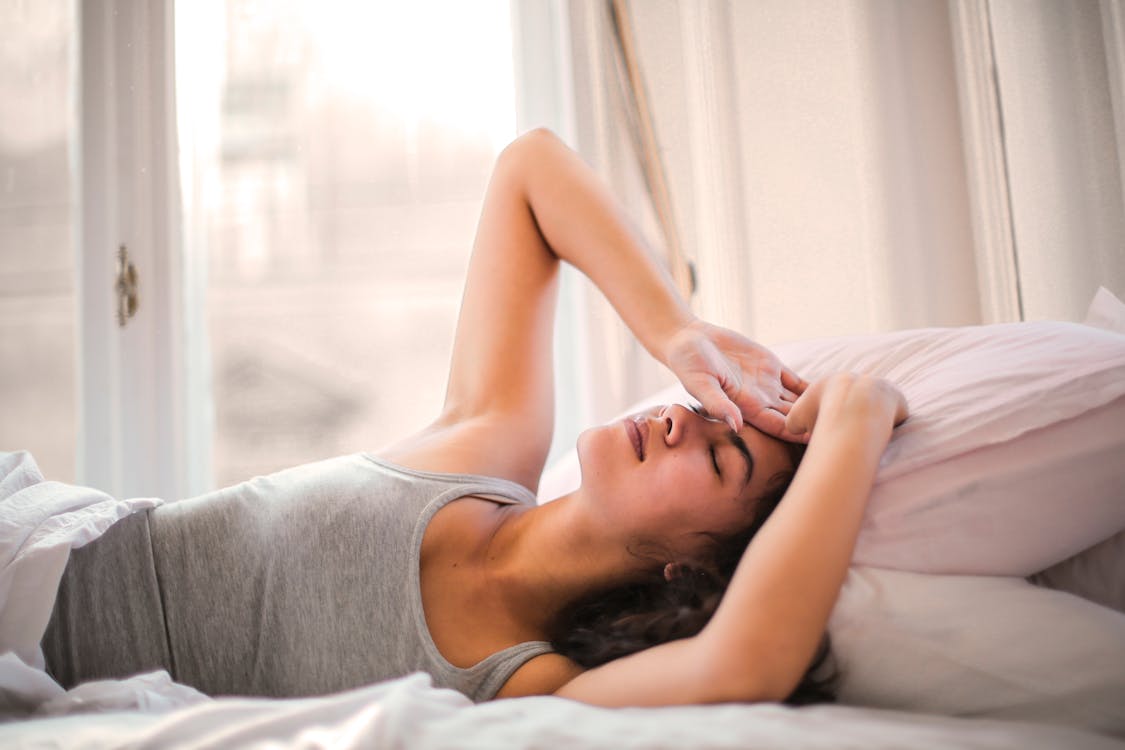
If you've ever woken up with a stuffy nose, itchy eyes, or that persistent tickle in your throat that won't go away — your indoor air might be the culprit. Dust mites, pet dander, pollen, and mold spores circulate through most homes constantly, and standard HVAC filters barely scratch the surface. A dedicated air purifier with a true HEPA filter can capture 99.97% of particles down to 0.3 microns, making a dramatic difference for allergy sufferers.
But the market is flooded with options ranging from $30 desktop units to $800 smart purifiers. Which ones actually work? We spent weeks comparing filtration performance, noise levels, room coverage, filter replacement costs, and real user feedback to bring you the 5 best air purifiers for allergies in 2026.
What to Look for in an Air Purifier for Allergies
Before diving into our picks, here's what actually matters when choosing an air purifier for allergy relief:
True HEPA vs. HEPA-Type: Only "True HEPA" meets the 99.97% at 0.3 microns standard. "HEPA-type" or "HEPA-style" filters are marketing terms with no guaranteed performance. Always check for True HEPA certification.
Room coverage (CADR rating) tells you how many cubic feet of air the purifier can clean per minute. For a bedroom, look for a CADR of at least 150. Living rooms need 250+. A higher CADR means faster air cycling, which matters when pollen counts spike.
Noise levels are critical if you're running the purifier in your bedroom. Anything under 30 dB on low is whisper-quiet. Above 50 dB and you'll hear it competing with conversation.
Annual filter costs are the hidden expense. A $200 purifier with $80/year filters costs less over 5 years than a $150 purifier with $120/year filters. We factored this into every recommendation.
1. Dyson Purifier Big Quiet Formaldehyde — Best Premium Pick
Dyson's flagship air purifier sets the standard for whole-home filtration. With a CADR equivalent covering up to 1,076 sq ft, it handles open-plan living spaces with ease. The catalytic filter destroys formaldehyde continuously and never needs replacing — only the HEPA filter requires annual swaps.
The "Big Quiet" name isn't marketing fluff. At its lowest setting, it produces just 17 dB — essentially silent. The cone aerodynamics project purified air across the entire room without the jet-engine whoosh of older Dyson models.
✅ Pros: Massive coverage, near-silent operation, real-time air quality display, formaldehyde destruction, app control
❌ Cons: Premium price (~$750), replacement HEPA filters run $70+, large footprint
2. Coway Airmega AP-1512HH — Best Value for Bedrooms
The Coway Airmega has been a consistent bestseller for good reason. At around $150, it packs a 4-stage filtration system (pre-filter, deodorization, True HEPA, ionizer) into a compact unit that covers rooms up to 361 sq ft. That's more than enough for any bedroom or home office.
The auto mode uses an air quality sensor to adjust fan speed in real time. When air is clean, it drops to eco mode and shuts off the fan entirely — saving electricity and reducing noise. At its lowest, it runs at about 24 dB. The filter indicator tells you exactly when replacements are needed, and HEPA filters cost roughly $40 every 12 months.
✅ Pros: Excellent price-to-performance, low filter costs, quiet auto mode, compact design, eco-friendly shutoff
❌ Cons: No app control, ionizer is controversial (produces trace ozone), limited to medium rooms
3. Levoit Core 400S — Best Smart Purifier Under $250
Levoit has quietly become one of the top air purifier brands, and the Core 400S shows why. It covers up to 403 sq ft with a CADR of 260 CFM — impressive for a unit that costs under $230. The VeSync app integration lets you monitor air quality, set schedules, and control the purifier remotely. It also works with Alexa and Google Home.
Filtration uses a 3-in-1 True HEPA setup that captures allergens, dust, smoke, and odors. The laser-based AirSight Plus sensor provides real-time PM2.5 readings displayed on the unit and in the app. Auto mode adjusts fan speed based on detected pollution levels.
Noise at the lowest setting sits at 24 dB, and replacement filters run about $40 every 6-8 months depending on usage — slightly more frequent than some competitors but still reasonable.
✅ Pros: Smart home integration, strong CADR for the price, real-time PM2.5 display, sleek design, quiet
❌ Cons: Filters need more frequent replacement, app occasionally buggy, no formaldehyde filter
4. Winix 5500-2 — Best for Pet Owners With Allergies
If your allergies are triggered primarily by pet dander, the Winix 5500-2 deserves your attention. Its True HEPA filter paired with Winix's proprietary PlasmaWave technology neutralizes viruses, bacteria, and allergens without producing harmful ozone (CARB certified). It covers up to 360 sq ft and carries a CADR of 243 CFM.
What sets the Winix apart for pet households is its washable carbon pre-filter. Pet hair and large particles get caught before reaching the HEPA filter, extending its lifespan significantly. The carbon layer also handles pet odors effectively. The Smart Sensor with auto mode adjusts to real-time air quality, and the sleep mode drops noise to a barely perceptible 27 dB.
At around $160 with HEPA filters lasting 12 months at roughly $50 each, the total cost of ownership over 5 years is among the lowest in this roundup.
✅ Pros: Excellent for pet dander, washable pre-filter saves money, PlasmaWave is ozone-safe, low annual costs
❌ Cons: No app control, design feels dated, light indicators can't be fully dimmed
5. Blueair Blue Pure 211+ Auto — Best for Large Living Rooms
Need to purify a large open space? The Blueair Blue Pure 211+ Auto covers up to 540 sq ft with a CADR of 350 CFM — one of the highest in its price range (around $280). Blueair's HEPASilent technology combines mechanical and electrostatic filtration to capture 99.97% of particles while maintaining lower air resistance, which means quieter operation and less energy consumption.
The auto mode uses an integrated particle sensor to adjust between three fan speeds. The fabric pre-filter is washable and comes in multiple colors, letting you match your room decor. The main filter (combination particle + carbon) needs replacing every 6 months and runs about $40.
One standout feature: the 360-degree air intake pulls air from all directions rather than just the front, making placement flexible. You can put it in a corner, against a wall, or in the middle of a room and it performs equally well.
✅ Pros: Massive room coverage, powerful CADR, 360° intake, energy efficient, colorful pre-filter options
❌ Cons: 6-month filter life adds up, no smart home integration, only 3 fan speeds, taller unit
Quick Comparison Table
Dyson Big Quiet — 1,076 sq ft | 17 dB | ~$750 | $70/yr filters
Coway AP-1512HH — 361 sq ft | 24 dB | ~$150 | $40/yr filters
Levoit Core 400S — 403 sq ft | 24 dB | ~$230 | $60/yr filters
Winix 5500-2 — 360 sq ft | 27 dB | ~$160 | $50/yr filters
Blueair 211+ Auto — 540 sq ft | 31 dB | ~$280 | $80/yr filters
Our Top Pick: Coway Airmega AP-1512HH
For most allergy sufferers, the Coway AP-1512HH hits the sweet spot. At $150 with low annual filter costs, proven 4-stage filtration, and near-silent operation, it delivers genuine relief without the premium price tag. If you have a larger space or want smart features, the Levoit Core 400S and Blueair 211+ Auto are excellent upgrades. And if budget isn't a concern, the Dyson Big Quiet is simply the best air purifier money can buy right now.
Whichever you choose, running a True HEPA purifier consistently — especially during spring pollen season and winter when windows stay shut — can make a remarkable difference in how you breathe and sleep.
Affiliate Disclosure: This post contains affiliate links. If you purchase through these links, we may earn a small commission at no extra cost to you. We only recommend products we genuinely believe in.
Comments
Post a Comment