Half of All Data Centers Planned for 2026 Have Been Cancelled or Delayed — Here's What It Means for AI and the Cloud
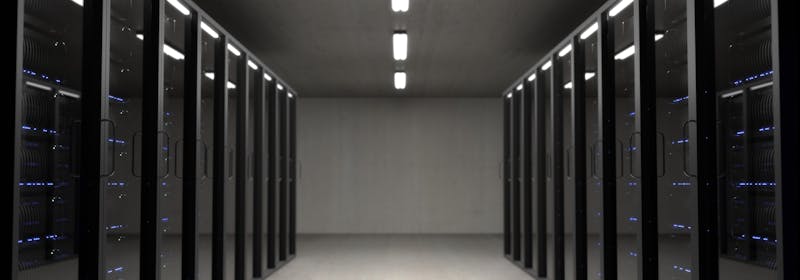
The tech industry just got a massive reality check. According to new reports circulating across the industry this week, roughly half of all data centers originally planned for construction in 2026 have been either cancelled outright or delayed indefinitely. For an industry that has been on an unprecedented building spree fueled by artificial intelligence demand, this is nothing short of a seismic shift.
The news has sent shockwaves through Silicon Valley, Wall Street, and the broader tech ecosystem. Companies that were racing to build the infrastructure needed to power the next generation of AI models are now pumping the brakes — and the reasons why tell us a lot about where technology is headed.
The AI Gold Rush That Sparked the Building Boom
To understand why this matters, you need to rewind to 2023 and 2024. When ChatGPT exploded onto the scene and every major tech company pivoted hard toward AI, the demand for computing power went through the roof. Training large language models requires enormous clusters of GPUs, and those GPUs need to live somewhere — in massive, power-hungry data centers.
Companies like Microsoft, Google, Amazon, Meta, and Oracle announced billions of dollars in data center investments. Smaller players and real estate investment trusts (REITs) like Equinix and Digital Realty also jumped in. The total planned investment globally was estimated at over $500 billion through 2028.
It was the biggest infrastructure buildout since the fiber optic boom of the late 1990s. And just like that boom, reality is starting to catch up with the hype.
Why Are Data Centers Being Cancelled?
The cancellations and delays stem from a perfect storm of challenges that many in the industry saw coming but few wanted to talk about publicly.
1. Power Grid Constraints
This is the big one. A single hyperscale data center can consume as much electricity as a small city — anywhere from 100 to 500 megawatts. In many regions, the electrical grid simply cannot keep up. Utilities across the United States and Europe have been warning for over a year that they cannot guarantee power delivery for the wave of planned facilities.
In Virginia's "Data Center Alley" — the densest concentration of data centers on Earth — Dominion Energy has been turning away new connections. Similar bottlenecks exist in Dublin, Amsterdam, Frankfurt, and Singapore.
2. Rising Construction Costs
Building a modern data center isn't cheap. Costs have risen 20-30% over the past two years due to inflation in construction materials, specialized cooling equipment, and the electrical infrastructure needed. A facility that might have cost $1 billion in 2023 now runs closer to $1.3-1.5 billion.
3. AI Revenue Uncertainty
Here's the uncomfortable truth: despite all the excitement around AI, many companies are still struggling to turn their AI investments into proportional revenue. The "show me the money" question is getting louder. If the revenue doesn't materialize, the business case for building all these data centers weakens considerably.
4. Efficiency Improvements
Ironically, AI is getting more efficient. New model architectures, better training techniques, and more efficient chips (like NVIDIA's Blackwell and AMD's MI400 series) mean you can do more with less hardware. Some companies are finding they don't need as many facilities as originally projected.
Who's Affected?
The ripple effects are hitting multiple sectors:
🏗️ Construction firms that staffed up for the boom are now facing project cancellations and layoffs.
⚡ Equipment manufacturers — particularly those making generators, cooling systems, and electrical switchgear — are seeing orders evaporate.
📊 REITs and real estate investors who bought land for data center campuses are left holding depreciating assets.
💼 Local communities that were promised jobs and tax revenue from new facilities are back to square one.
On the flip side, existing data center operators with available capacity are in an even stronger position. If you already have power and space, your leverage just increased dramatically.
What This Means for AI Development
Does this mean AI is slowing down? Not necessarily. But it does mean the industry is shifting from a "build everything, figure it out later" mentality to something more measured. Companies are being more strategic about where they build, what they build, and how they use existing resources.
We're likely to see several trends accelerate:
Edge computing — processing data closer to where it's generated rather than shipping everything to centralized data centers. This reduces the need for massive facilities.
Nuclear power partnerships — Microsoft's deal with Three Mile Island and Amazon's investments in small modular reactors (SMRs) show that tech companies are willing to go nuclear to solve the power problem.
International diversification — expect more data centers in locations with abundant, cheap energy: Scandinavia (hydroelectric), the Middle East (solar), and parts of Southeast Asia.
The Investment Angle
For investors, this shakeout is actually healthy. The data center sector was showing signs of speculative excess reminiscent of previous tech bubbles. A correction now — before billions more are poured into facilities that might never reach full capacity — is better than a crash later.
If you're interested in understanding the economics of tech infrastructure and investment cycles, books on technology infrastructure investing can give you a solid foundation for making sense of these shifts.
Companies with existing infrastructure and proven demand — think the hyperscalers themselves (AWS, Azure, Google Cloud) — remain strong. It's the speculative builders and late entrants who are most exposed.
The Bigger Picture
What's happening with data centers is a microcosm of a broader pattern in tech: the cycle of hype, overbuilding, correction, and maturation. We saw it with dot-com, with crypto, and now we're seeing it with AI infrastructure.
The technology itself isn't going away — AI is real, it's useful, and it's transforming industries. But the physical infrastructure needed to support it has to be built responsibly, sustainably, and in line with actual demand rather than speculative projections.
Half of all planned data centers being cancelled is a big number. But it might also be exactly the course correction the industry needed.
Comments
Post a Comment