NASA Astronauts Are Taking Jaw-Dropping Photos From Space With the iPhone 17 Pro Max — And the Internet Cannot Handle It
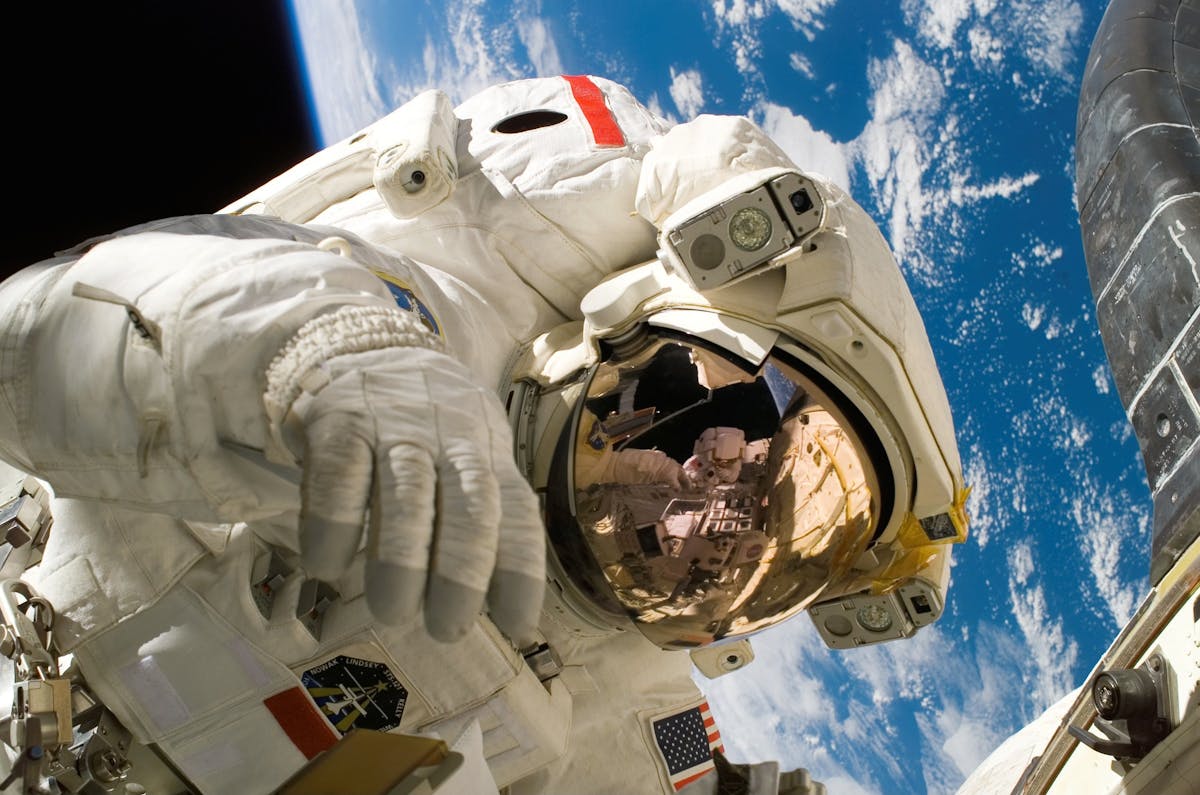
In what might be the most unexpected product placement in the history of technology, NASA's Artemis II crew has been sharing breathtaking photos of the lunar surface — taken on an iPhone 17 Pro Max. And the internet is absolutely losing its mind.
Commander Reid Wiseman snapped what many are calling the most stunning civilian photo of the Moon ever captured, and he did it with the same phone you can buy at your local Apple Store. The images, shared through NASA's official channels on April 7, 2026, show the lunar surface in extraordinary detail, with craters, ridges, and shadows rendered in a way that feels almost surreal.
How Did an iPhone End Up on Artemis II?
Apple and NASA have had a quiet but significant partnership for years. The iPhone 17 Pro Max, released in September 2025, was specifically tested for use in low-gravity and high-radiation environments. While the crew obviously has professional-grade imaging equipment aboard, the decision to bring consumer smartphones was part of a broader experiment to test how everyday technology performs beyond Earth's atmosphere.
The iPhone 17 Pro Max features a 48MP main sensor with a custom computational photography pipeline that Apple calls Photonic Engine 3.0. In space, this translates to the ability to capture incredible dynamic range — from the blinding brightness of the sun-lit lunar surface to the deep black of space, all in a single frame.
The Photos That Broke the Internet
Wiseman's first photo — a close-up of the lunar surface as the Orion spacecraft passed within 100 kilometers — racked up over 15 million views on social media within hours. There are no words, Wiseman captioned the image, and honestly, he's right.
The detail is staggering. You can see individual boulders casting long shadows across ancient crater floors. The color grading — a natural byproduct of the iPhone's processing — gives the images a cinematic quality that NASA's own professional equipment sometimes struggles to achieve for public consumption.
A second photo, showing Earth rising over the lunar horizon, has already been compared to the iconic Earthrise photo taken during Apollo 8 in 1968. Except this one was taken on a phone that fits in your pocket.
Apple's Best Ad — And They Didn't Even Make It
Marketing experts are calling this the most valuable unplanned advertisement in Apple's history. The Shot on iPhone campaign has featured everything from professional photographers to everyday users, but astronauts photographing the Moon from lunar orbit? That's a level of flex that no ad agency could have scripted.
Apple's stock jumped 2.3% in pre-market trading on Monday as the photos went viral. Analysts at Morgan Stanley noted that the Artemis II iPhone moment could drive significant upgrade demand for the upcoming iPhone 18 series, especially if Apple leans into the space photography angle.
NASA just gave Apple the best Shot on iPhone ad ever. You literally cannot top photos from lunar orbit. Game over. — Macworld
What This Means for Smartphone Photography
If a smartphone can capture publication-quality images from space, what does that mean for the camera industry? The gap between dedicated cameras and phones has been closing for years, but this feels like a symbolic tipping point.
Professional photographers have mixed feelings. Some see it as validation of computational photography's power. Others point out that the conditions in space — no atmosphere, no light pollution, extreme contrast — actually play to the iPhone's strengths rather than exposing its weaknesses.
Either way, the conversation has shifted. When someone asks what camera did you use and the answer is the same one in your pocket, it democratizes the very concept of extraordinary photography.
The Artemis II Mission So Far
For those who haven't been following, Artemis II launched on March 28, 2026, carrying four astronauts on a 10-day mission around the Moon. It's the first crewed lunar mission since Apollo 17 in 1972 — over 50 years ago. The crew includes Commander Reid Wiseman, Pilot Victor Glover, Mission Specialist Christina Koch, and Canadian Space Agency astronaut Jeremy Hansen.
The mission is a critical stepping stone toward Artemis III, which aims to land astronauts on the lunar surface in 2027. But right now, the conversation isn't about scientific objectives — it's about iPhone photos. And honestly? That might be the best thing for space exploration's public image in decades.
Want to Take Your Own Photography to the Next Level?
You don't need to go to space to get incredible photos from your iPhone. The right accessories can make a massive difference. A good clip-on lens kit can add macro, wide-angle, and telephoto capabilities. And if you're serious about mobile photography, a smartphone gimbal will transform your video work.
For astrophotography specifically, a telescope phone adapter lets you capture the Moon and planets in stunning detail from your backyard. Not quite Artemis II level, but surprisingly close.
The Bigger Picture
What makes these photos truly special isn't the technology — it's the accessibility. When the Apollo astronauts brought back photos, they were taken on custom Hasselblad cameras that cost more than most people's homes. The images were processed in NASA labs and released on NASA's schedule.
In 2026, an astronaut can snap a photo on a consumer device, and within hours, millions of people worldwide are seeing it, sharing it, and feeling connected to a mission that's happening 384,000 kilometers away. That's the real story here.
Space exploration has always struggled with public engagement. People care about launches and landings, but the in-between gets lost. These iPhone photos have done something remarkable: they've made people care about a mission that's happening right now, in real-time. And they've done it through the most relatable technology on Earth — the phone in your pocket.
Disclosure: This article may contain affiliate links. If you purchase through these links, we may earn a small commission at no extra cost to you.
Comments
Post a Comment